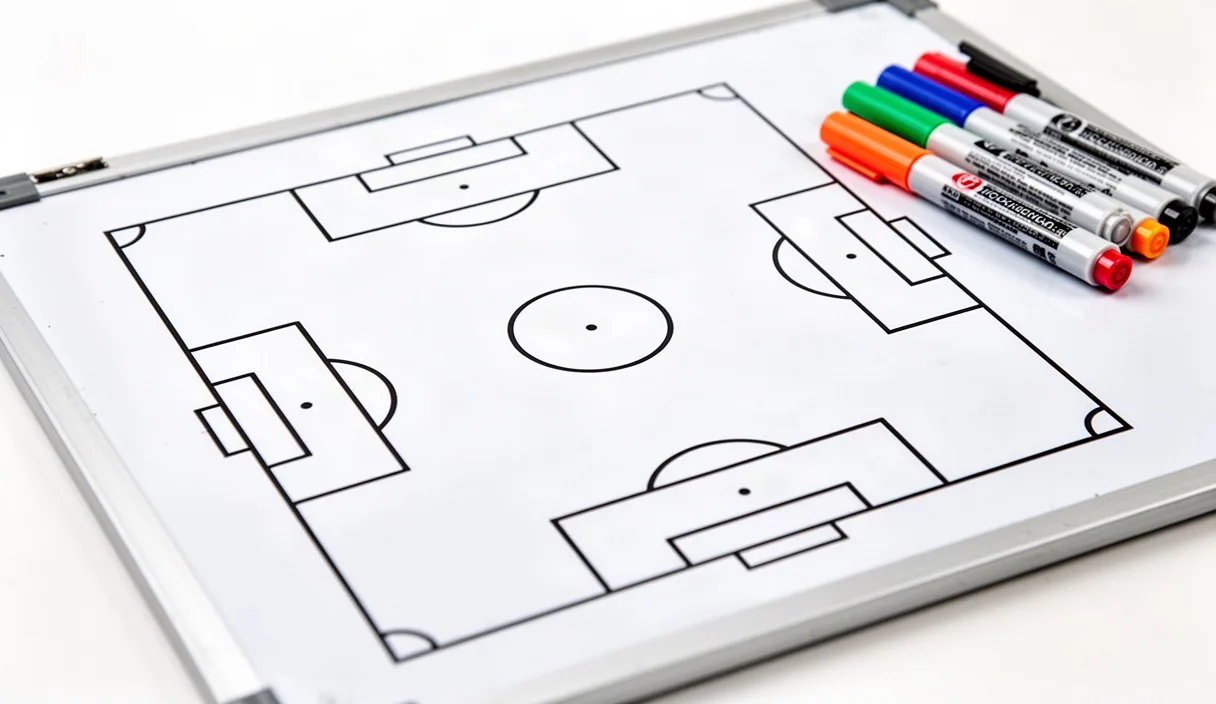
A scout does not watch the ball. A scout watches a player, then the space around that player. This shifts attention from the score to the pattern. The pattern tells you more than the highlight.
This checklist breaks a match into small, repeatable tasks. Each task fits inside ninety minutes. None of them require special software. A notebook and a plain view of the pitch are enough.
Choosing one player to follow per half
Pick one player before kickoff. Write the name at the top of the page. This single choice removes the temptation to chase the ball.
Choose a different player for the second half. Two players per match gives two clean data sets. Watching eleven players at once gives none.
Base the choice on a simple question. What do you want to learn today. Passing range. Pressing habits. Recovery speed after losing the ball. One question, one player, one half.
- First half: a central midfielder, focus on passing under pressure.
- Second half: a full-back, focus on recovery runs.
- Next match: repeat with a striker, focus on movement in the box.
Write the player's shirt number on the page too. Names get harder to track once substitutes enter. Numbers do not change mid-half.
What to note during build-up play
Build-up play starts with the goalkeeper or the deepest defender. Note who receives the first pass. Note the direction of that pass, short or long.
Count the touches before the ball reaches the middle third. Three touches or fewer suggests a direct team. Six or more suggests a team that circulates before committing forward. Neither is better. Each style asks different things from a player.
Watch the body shape of the receiver before the ball arrives. A player who checks over their shoulder before receiving has already seen the picture. A player who receives with their back fully to goal, without a glance, is guessing.
| Build-up signal | What it tells you |
|---|---|
| First pass goes wide, not forward | Team is building patience, testing full-backs |
| Long pass bypasses midfield | Team avoids pressure, relies on second balls |
| Center-back steps into midfield with the ball | Team trusts one player to break lines by carrying |
Write the minute next to any note. A pattern that appears in minute five and again in minute seventy is not an accident. A pattern that appears once is a moment, not a habit.
Watching movement away from the ball
Most of a match happens away from the ball. A scout spends most of the time watching that space, not the play everyone else is watching.
Pick the player you chose earlier. Watch what they do in the fifteen seconds after they pass the ball away. Do they stand still. Do they offer a new passing angle. Do they drop, or do they push higher.
Off-ball movement reveals work rate in a way stats sheets rarely capture. A player can complete ninety percent of passes and still contribute little movement to help teammates. The two numbers do not always match.
- Note whether the player creates space for a teammate by pulling a marker out of position.
- Note whether the player times a run to stay level with the last defender, or arrives early and gets caught offside.
- Note how often the player checks their shoulder before a teammate receives the ball, signaling for a pass.
Track this for ten-minute windows. A player might be quiet for twenty minutes, then very active for the next ten. The full picture only appears across the whole half, not a single sequence.
Assessing decision-making under pressure
Pressure changes a player more than skill does. A calm first touch in space says little. The same touch with an opponent closing in says much more.
Watch the split second before the ball arrives under pressure. Does the player already know their next move, or do they decide only after the ball touches their foot. The first case usually ends in a clean pass or dribble. The second case usually ends in a loss of possession.
Count the number of times the player is pressed within three seconds of receiving the ball. Then count how many of those moments end with the player keeping possession. A ratio of six out of ten kept possessions under pressure is a useful marker, though thresholds vary by position and level of play.
Simple pressure test
- Note the moment an opponent closes within two meters.
- Note the player's next action: pass, dribble, shot, or loss of ball.
- Note whether the action was quick, less than one second, or slow.
Quick, correct decisions under pressure are rare. When you see three or four in a half from one player, write the minute marks down. These are the moments worth rewatching later, if footage is available.
A short checklist for full-match viewing
A full match asks for more structure than a single half. Break the ninety minutes into blocks. This keeps attention from drifting toward only the ball.
- Minutes 1 to 15: watch team shape without the ball, not individual players.
- Minutes 15 to 45: follow the first chosen player, focus on build-up and pressure.
- Halftime: write a three-sentence summary before forgetting small details.
- Minutes 45 to 75: follow the second chosen player, focus on off-ball movement.
- Minutes 75 to 90: watch fatigue signs, positioning discipline, and substitution impact.
Fatigue changes decision-making late in matches. A player who looked sharp in minute twenty might slow their recovery runs by minute eighty. Note the drop-off, if any. Note whether the drop-off affects the team's shape or stays isolated to one player.
Keep the checklist on paper, not a phone. A phone invites notifications. A notebook stays quiet, which matches the task.
Common mistakes
Watching too many players at once is the most common mistake. The eye jumps from name to name and nothing gets recorded with depth.
Writing only about goals and shots is another mistake. Goals are rare. A ninety-minute match might produce two or three shots on target from your chosen player. The other eighty-seven minutes hold the real information.
Skipping the halftime summary loses detail fast. Memory fades within twenty minutes. A rough three-sentence note at the break saves the details a full recap would lose.
- Do not judge a player from one match alone. One match shows a moment, not a pattern.
- Do not confuse effort with quality. A player can run constantly and still make poor decisions.
- Do not ignore weather and pitch condition. A heavy pitch changes passing choices and should factor into any note.
Turning notes into a clear summary
Raw notes are not a report. A report groups the notes into a small number of themes, three or four at most.
Read back through the match notes once the game ends. Group similar observations together: passing tendencies, movement patterns, pressure responses. Ignore anything mentioned only once, since a single instance rarely forms a pattern.
Write the summary in short, plain sentences. Avoid guessing at motivation. State only what was observed. "Player checked shoulder before receiving in 9 of 12 instances" is a fact. "Player has great vision" is an opinion dressed as a fact.
| Raw note | Summary sentence |
|---|---|
| Lost ball under pressure 4 times, kept it 6 times | Keeps possession under pressure in most attempts, roughly six of ten. |
| Made 5 late runs into the box, scored on 1 | Offers regular late movement into the box, low conversion this match. |
| Dropped deep to collect ball 8 times in first half | Frequently drops to link play, especially in the first half. |
Keep the summary short enough to read in under a minute. A long report gets skimmed. A short one gets remembered. If the observations raise questions about fitness, injury history, or long-term development, pass those questions to a coach or a medical professional rather than drawing conclusions from a single match.
Next match, start again with a blank page. One player, one half, one clear question. The method stays the same. Only the player and the question change.